
Understanding what makes sustainable carbon materials perform
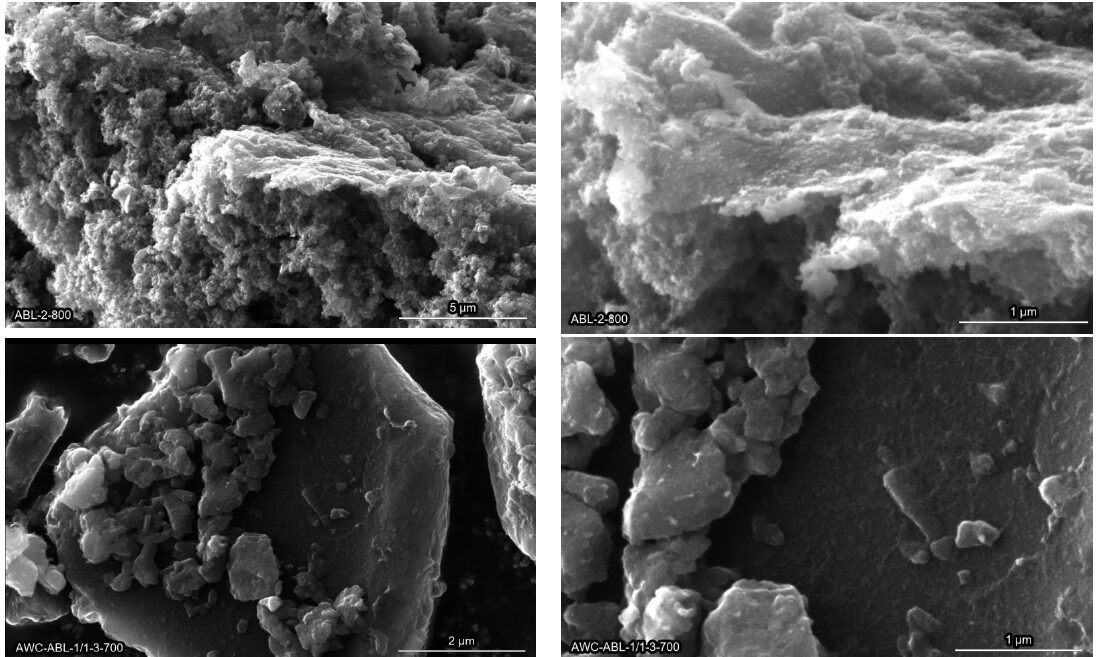
In cooperation with its consortium partners, ISSP UL concentrated on investigating the properties of carbon materials derived from biomass. As part of the project, the samples from renewable resources were prepared and analyzed by the project partners using a variety of advanced analytical techniques and electrochemical tests. This enabled the researchers to go beyond merely looking at the appearance of the materials and to identify the features that affect their electrochemical performance.
The ISSP UL researchers used methods such as scanning electron microscopy, surface area and pore-structure analysis, Raman spectroscopy, X-ray diffraction and X-ray photoelectron spectroscopy, as well as electrochemical measurements to determine how the materials' internal structure and surface chemistry influence their ability to store electrical charge. Since the information obtained from these different techniques complemented one another, the researchers were able to confirm the parameters that are the reason why some materials perform better than others.
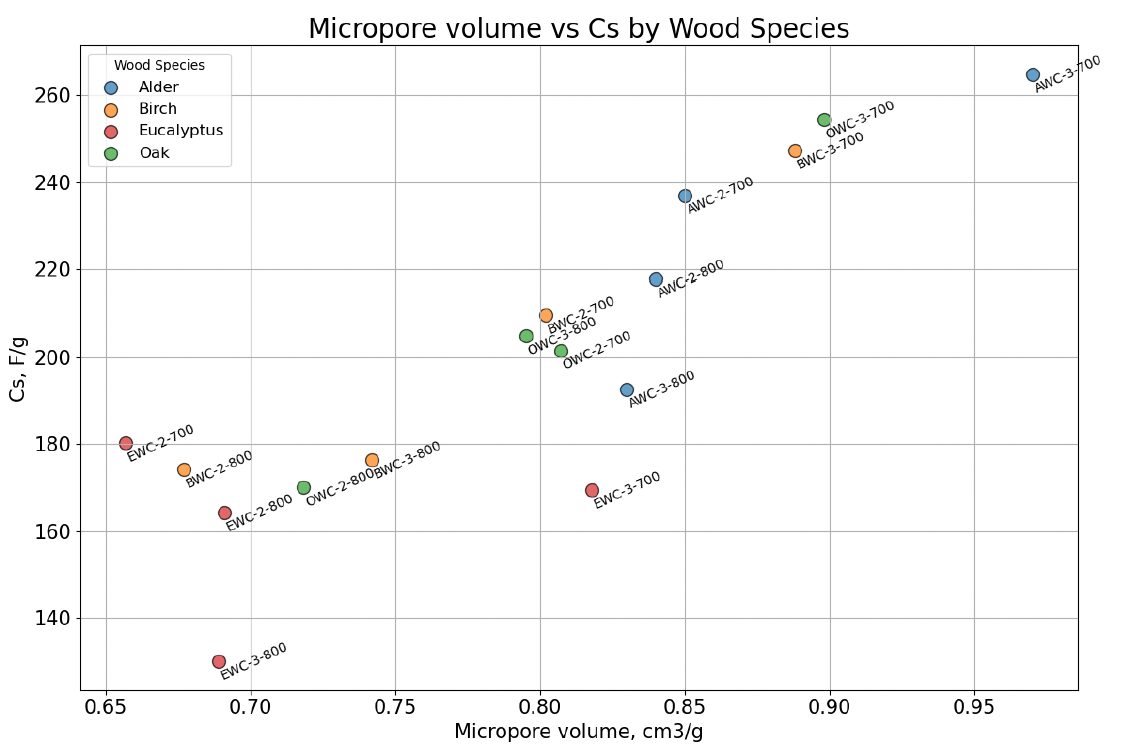
Scatter plot: average specific capacitance (Cs) versus micropore volume. ISSP UL analysis revealed a strong relationship between pore structure and electrochemical performance, helping identify the most promising electrode materials.
The study showed clear connections between pore structure and electrochemical performance and thus offered valuable guidance for the development of better electrode materials. Among the carbon materials evaluated within the project, activated carbon derived from alder wood demonstrated particularly promising characteristics. By carrying out thorough characterization and testing, ISSP UL managed to identify this material as one of the best candidates for further development and scale-up.
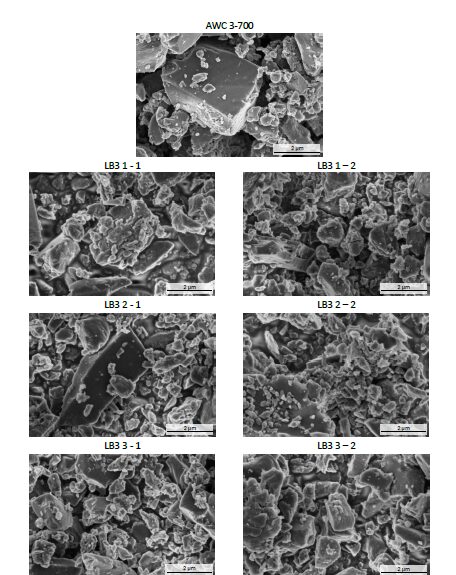 SEM
images of initial AWC-3-700 and large batch samples. A comparison of
laboratory-produced and scaled-up carbon materials, demonstrating that key
structural properties were successfully maintained.
The work carried out by ISSP UL yet
again shows how important materials characterisation is when it comes to
innovation. While creating new material is only one part of the problem, understanding
why it works lets researchers and industry improve it, reproduce it, and
eventually bring it closer to real-world applications. Because of its expertise
in materials science and electrochemistry, ISSP UL has helped ARMS advance the
development of sustainable carbon materials for future energy-storage
technologies.
Title image: SEM
images: Activated carbon structure studied by ISSP UL researchers to understand
how material architecture influences energy-storage performance.