ARMS holds its 4th Consortium Meeting online
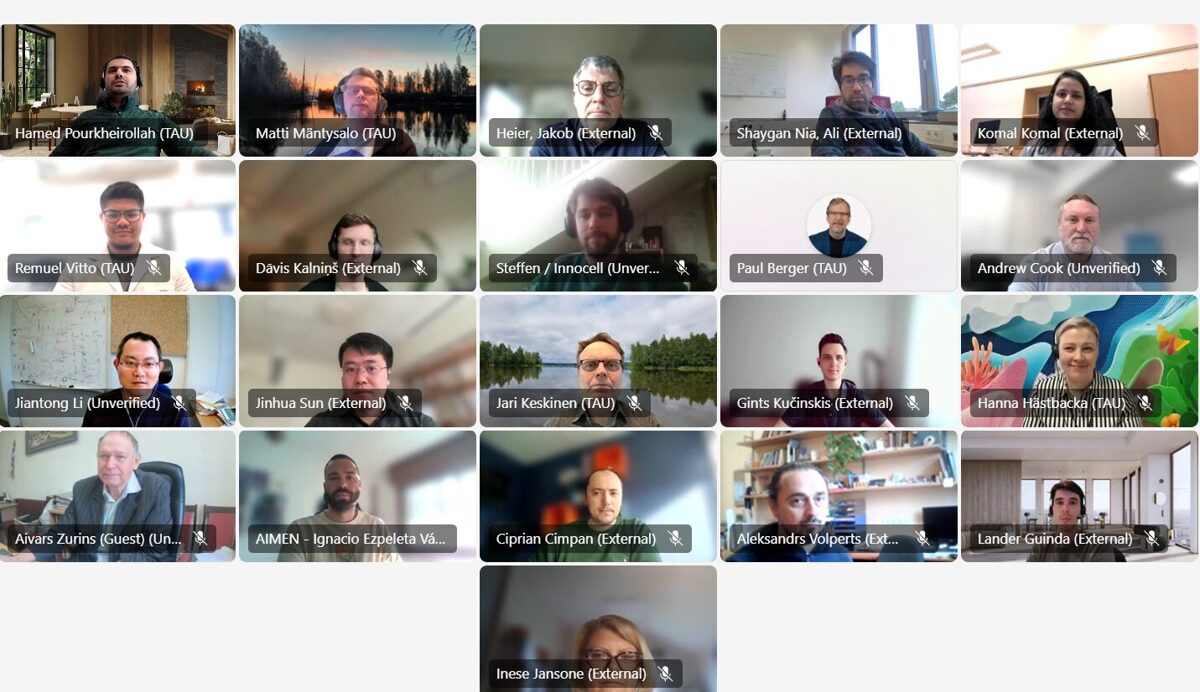
On April 24, ARMS held its fourth consortium meeting, bringing together project partners to review progress and plan future steps in advancing supercapacitor technology. The session highlighted achievements across all eight work packages (WPs) and included insights from the External Advisory Board.
WP1, led by the Institute of Solid State Physics, University of Latvia (ISSP UL), reported on the scalable synthesis of graphene-based bio-carbon materials, with promising results from recent experiments on wood-derived carbon. The team is now working on upscaling production for prototype development. KTH Royal Institute of Technology, responsible for WP2, shared progress in fabricating flexible, high-performance graphene-enhanced electrodes, with ongoing efforts to optimize their energy density and flexibility through various manufacturing techniques. WP3, managed by Tampere University (TAU), discussed improvements made via Atomic Layer Deposition (ALD), notably TiO2 coatings that enhance electrode capacitance; future work focuses on process scalability and exploring additional metal oxides.
In WP4, Innocell ApS detailed their development of safe, environmentally friendly electrolytes tailored for flexible and structural supercapacitors, with ongoing optimization and compatibility testing. WP5, led by CIDETEC Energy Storage, outlined plans for integrating these components into prototype supercapacitors; however, device fabrication has not yet commenced. The University of Southern Denmark (SDU), overseeing WP6, emphasized sustainability assessment efforts through a Safe and Sustainable by Design (SSbD) framework, aiming to minimize environmental impact and guide material choices.
Beneq, heading WP7, discussed communication strategies to increase project visibility through social media and the website, while TAU, managing WP8, highlighted the project coordination issues and revealed that the next in-person meeting will take place this October in Odense, Denmark.
The meeting served as a valuable platform for sharing progress, aligning upcoming tasks, and fostering collaboration. As the project advances, the focus remains on refining technologies within each work package and integrating them into a functional supercapacitor to meet growing energy storage demands.