The Minister of Climate and Energy of Latvia explores energy storage research at ARMS partner - ISSP UL
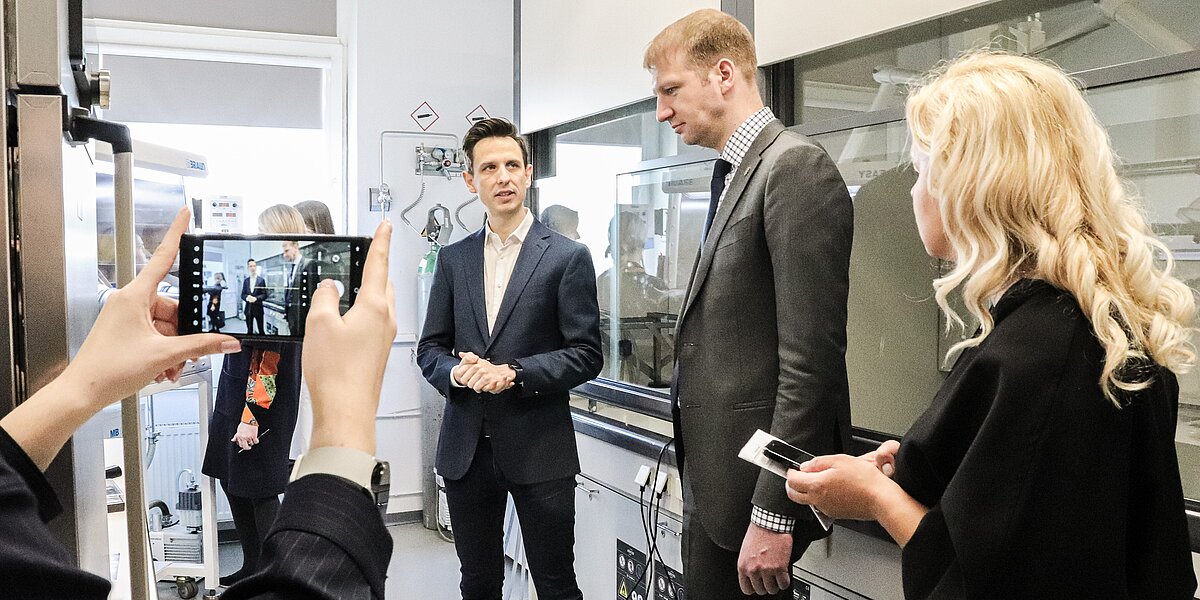
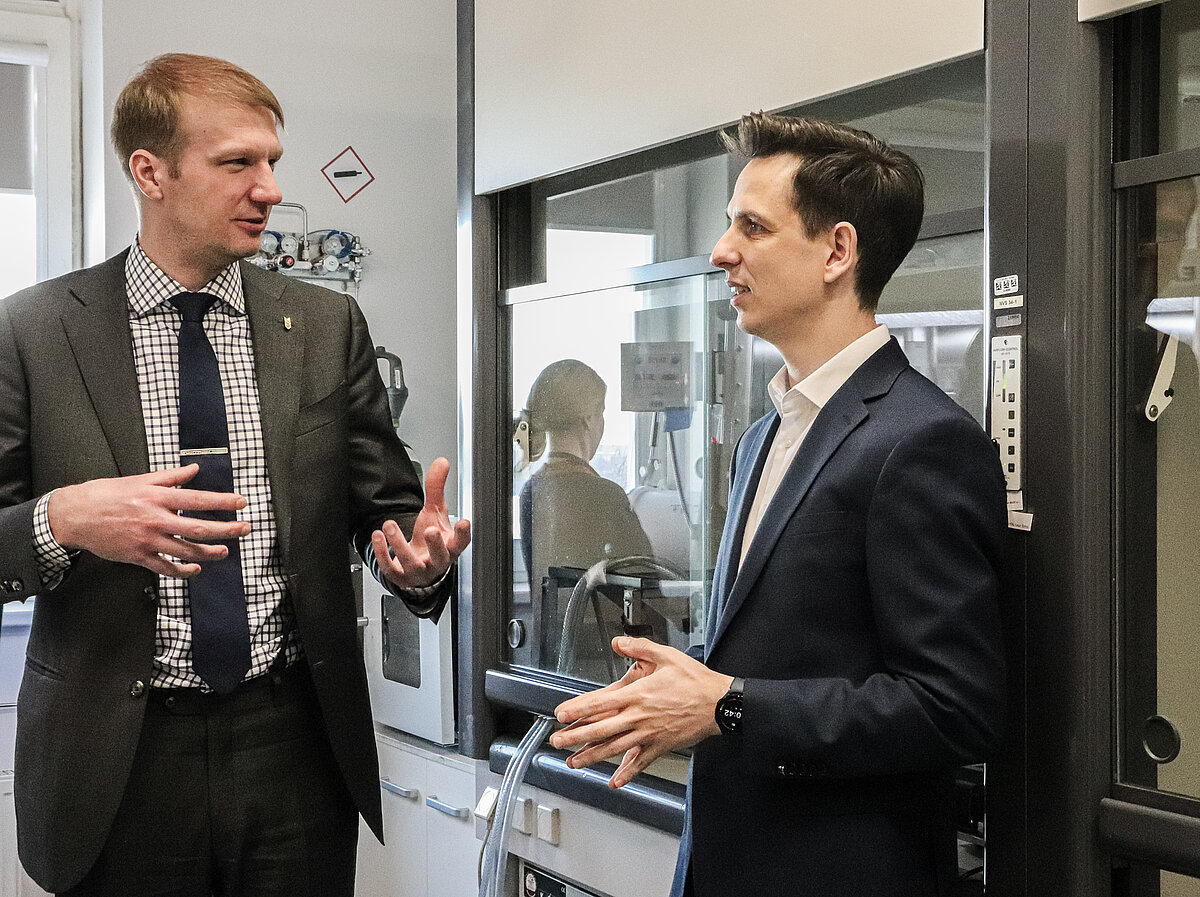
On February 19, the Institute of Solid State Physics, University of Latvia (ISSP UL) had the honor of hosting distinguished guests, including Kaspars Melnis, the Minister of Climate and Energy, along with Krista Garkalne, head of the minister’s office, and Sāra Šabazova, senior expert in strategic communication and public engagement. They were warmly welcomed by the ISSP UL leadership and Gints Kučinskis, who heads the ISSP UL’s Energy Materials Laboratory and leads the ARMS WP1. This visit was part of the Ministry's initiative to gain insights into the latest advancements in energy storage technologies and materials science, evaluate how the research at ISSP UL can inform and shape future climate and energy policies in Latvia, and strengthen relationships between government and research institutions, fostering a collaborative approach to addressing energy challenges.
The day started with a presentation highlighting ISSP UL’s research initiatives and notable achievements. After that, the guests took a tour of the laboratory facilities, including the Energy Materials Laboratory, where the ARMS project’s WP1 is underway. At the lab, they delved into ongoing research to enhance energy storage technologies, focusing on developing materials for lithium-ion (Li-ion) and sodium-ion (Na-ion) batteries, supercapacitors, and advancements in hydrogen production and storage. The delegation learned how innovative work at the Energy Materials Laboratory harnesses advanced material science and engineering to boost the efficiency and effectiveness of energy storage systems.
Following the lab tour, the conversation turned to future energy challenges, covering topics such as the evolution of energy storage technologies, the promise of hydrogen energy, and the role of nuclear technology in strengthening Europe’s energy independence. Given its position as the primary national authority on climate and energy policies, the Ministry of Climate and Energy of Latvia is essential in these discussions, underscoring the need for collaboration in addressing global energy issues.