Environmentally friendly supercapacitors with an aqueous hybrid electrolyte developed by Danish company InnoCell
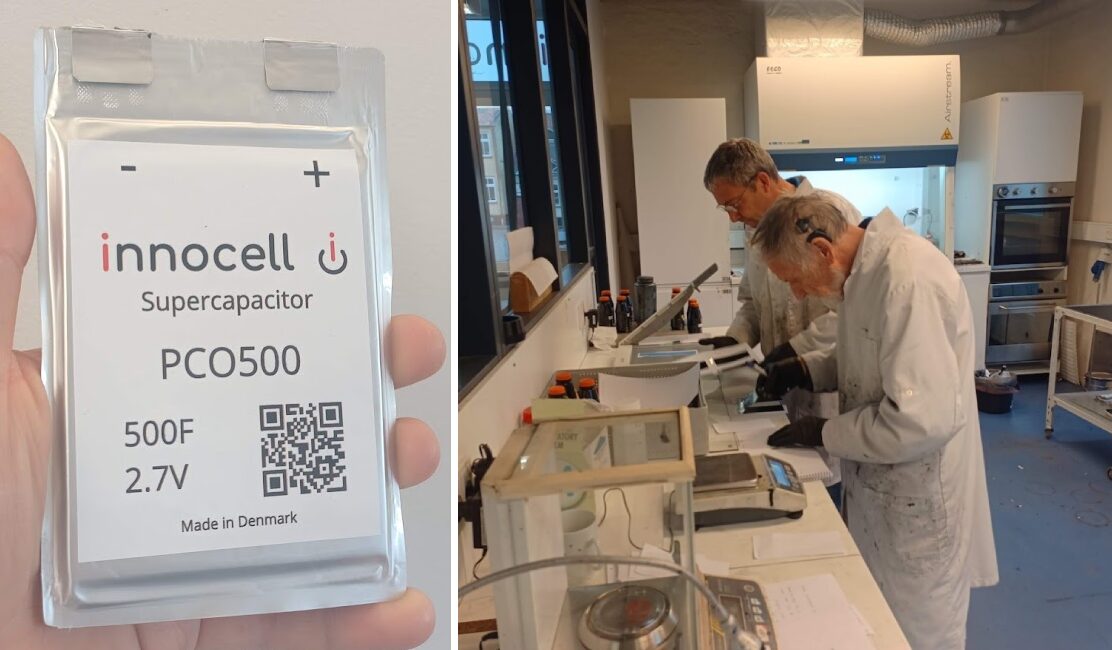
InnoCell specializes in the development and manufacture of new types of supercapacitors. One of the company’s primary objectives is to create supercapacitors that are as sustainable, safe, and environmentally friendly as possible.
The ARMS project plays a significant role in achieving these goals by fostering collaboration among many of Europe’s leading experts in relevant fields, providing InnoCell with a unique opportunity to improve its core technologies.
Within the project, InnoCell is developing its bio-curved graphene electrode material alongside other high-performance bio-based electrode materials. These materials undergo further enhancement through Atomic Layer Deposition (ALD) treatment to improve capacitance and electrochemical stability. In addition to electrode material development, the interaction between the electrolyte and electrode is studied, leading to the optimization of electrolytes based on InnoCell’s patented aqueous hybrid electrolyte technology.
The final materials are demonstrated in both traditional supercapacitors with pouch cell encapsulation and novel approaches such as flexible and structural supercapacitors.