Atomic layer-coated gRaphene
electrodes for Micro-flexible and Structural supercapacitors
(ARMS)
News & Events
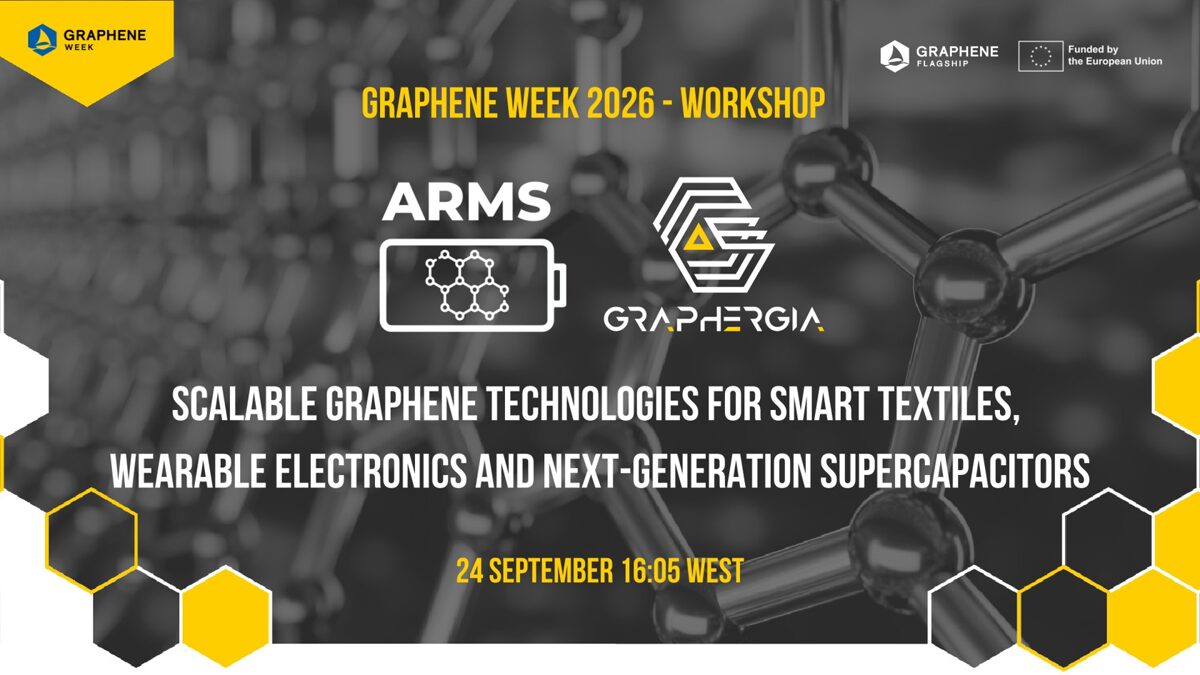
ARMS and GRAPHERGIA Workshop: Scalable graphene technologies for smart textiles, wearable electronics and next-generation supercapacitors
During Graphene Week 2026, held this year in Porto, Portugal, the ARMS and GRAPHERGIA projects will co-host a workshop on the latest advances in scalable graphene technologies for smart textiles, wearable electronics, and next-generation supercapacitors.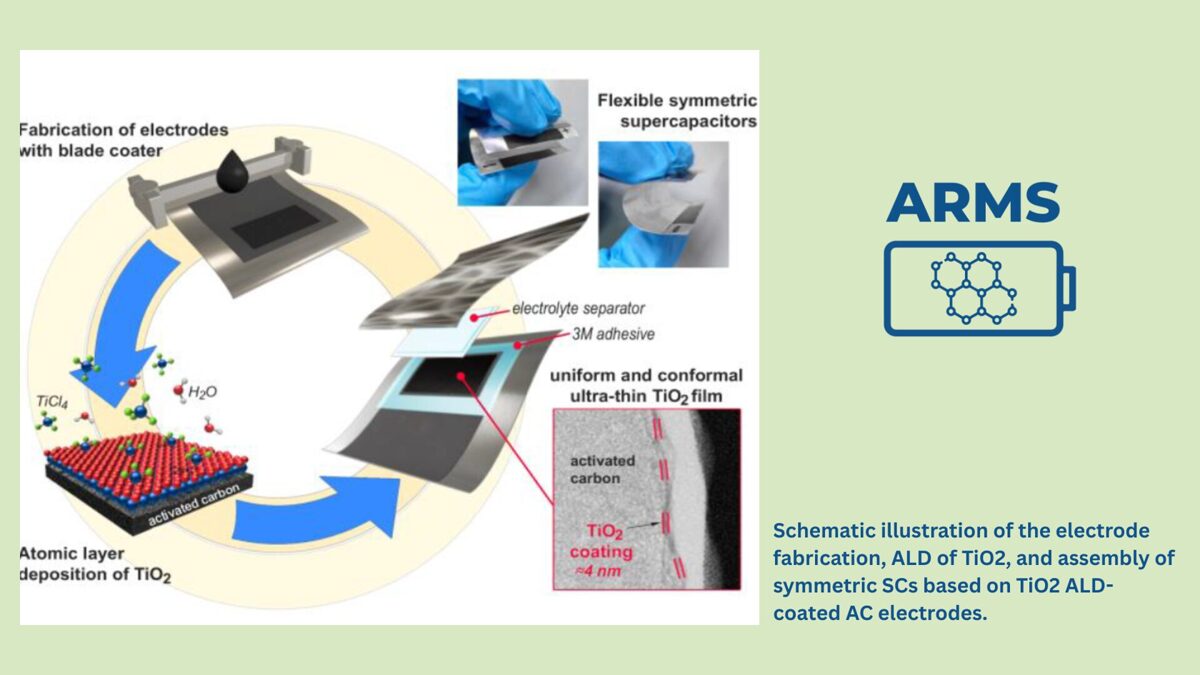
Advancing Sustainable Energy Storage: Highlights from the ARMS Workshop at FM&NT 2026
A new publication from ARMS researchers highlights an innovative approach to improving flexible supercapacitors. Presented at IEEE FLEPS 2026 conference, the work demonstrates improved energy-storage performance and excellent long-term stability by using ultra-thin titanium dioxide coatings on activated carbon electrodes.
Contact us
Project coordinator: Communications:
Matti Mäntysalo Inese Jansone
[email protected] [email protected]
This project, funded by the European Commission’s Horizon Europe programme, is part of the Graphene Flagship initiative
which works to advance technologies that rely on graphene and other 2D materials.
